Across disciplines and continents

People

ITMN is coordinated by a volunteer team and strengthened by hundreds of members worldwide.

Coordination

Core team

The people who keep conversations moving across disciplines and continents.

ITMN organizer

Nadine Ruehr

Karlsruhe Institute of Technology - Campus Alpin

Nadine is an ecophysiologist and focuses on understanding plant and ecosystem functioning in a changing world. She is head of the Plant Ecophysiology group at KIT and applies experiments and process models to study the impacts of extreme climate events on carbon and water cycling of trees and forests.

Contact ↗
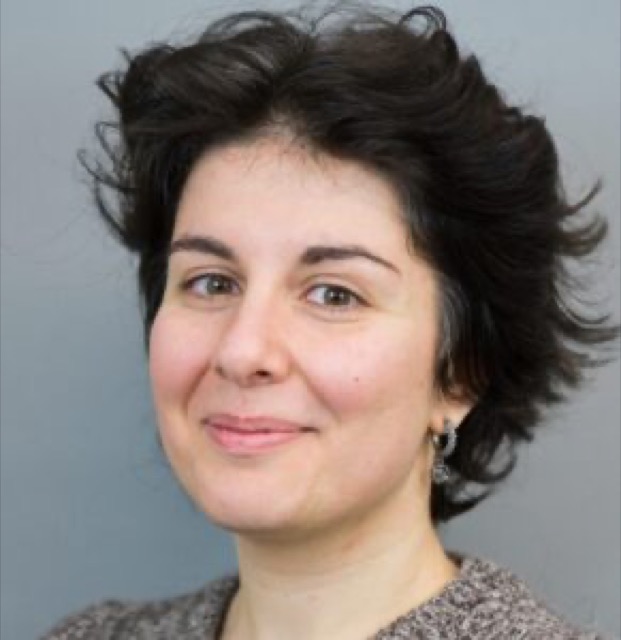
ITMN organizer

William Hammond

University of Florida, Agronomy Department, Plant Ecophysiology

William (Bill) aims to understand both the external drivers (e.g., climate, biotic agents) and internal mechanisms (e.g., plant physiological processes) that determine when trees stop living, and start dying – to answer the question, “What kills trees?”. As an Assistant Professor of Plant Ecophysiology at the University of Florida, his research crosses the scales of single xylem conduits to globally distributed forests, and involves anatomical, physiological, and climatological approaches. He is particularly passionate about the fates of big, old trees – and their disproportionate contributions to healthy forest ecosystems.

Contact ↗

ITMN organizer

Gina Marano

Swiss Federal Research Institute, WSL / Forest Ecology ETH Zurich / Forest Modelling Lab CNR Italy

Gina is a forest ecologist who develops and tests dynamic vegetation models linking long-term, short-term and compound stress factors to understand how drought, climate extremes and biotic disturbances drive tree mortality, affect tree growth, alter species composition and reshape forest dynamics. Her work spans temperate and Mediterranean forests in Europe, temperate rainforest in Chile and subtropical-to-warm-temperate forests in New Zealand.

Contact ↗

ITMN organizer

Jeanne Portier

Swiss Federal Research Institute WSL

Jeanne is a forest ecologist working for the Swiss National Forest Inventory. Her current research uses empirical modelling to better understand and predict single-tree mortality across wide environmental gradients and under changing climate conditions. She also brings a research background in boreal forest fire regimes, a topic she returns to whenever she can.

Contact ↗

ITMN organizer

Bernhard Schuldt

Technical University of Dresden – Chair of Forest Botany

Bernhard is specialized in forest ecology, ecophysiology and plant hydraulics. His research aims at identifying plant responses to climate change, causes and consequences of drought-induced tree mortality and key traits with causal relationship to climatic stressors. Thereby, he work on improving our understanding of the functioning of natural and artificial ecosystems.

Contact ↗

ITMN organizer

Tamir Klein

Weizmann Institut of Science, Israel

Dr. Klein studies tree physiology and forest ecology. His research has shown that trees are remarkably diverse and extremely adaptable in how they use water and carbon. His discoveries have shed new light on how trees cycle them between leaves, stems, and roots— and have even shown evidence for “carbon trade” between the roots of neighboring trees.

Contact ↗

ITMN organizer

Erick C. Morales

Hawkesbury Institude for the Environment , Australia

Erick Calderon Morales is a PhD candidate at Hawkesbury Institude for the Environment. His work is focused on improving the representation of plant hydraulic physiology in process-based vegetation models. He is particularly interested in predicting the time it takes tree species to reach total hydraulic failure during extreme droughts and heatwave events.

Contact ↗

ITMN organizer

Jofre Carnicer

University of Barcelona, CREAF, IRBio

Professor of Ecology at the University of Barcelona (UB), CREAF/IRBio researcher and since 2018 also author of the IPCC (Intergovernmental Panel of Climate Change). His research analyzes the impact of climate change on Mediterranean ecosystems and, in particular, focuses on the response of the forests, on the interaction between plant and animal, as well as on ecosystem functions.

Contact ↗

ITMN organizer

Thomas Pugh

Lund University - Dept of Physical Geography and Ecosystem Science / University of Birmingham - Birmingham Institute of Forest Research

Tom works on understanding interactions between vegetation, environmental change and the carbon cycle at regional and global scales. He has a background in computational modelling, particularly using global vegetation models, and his research applies a variety of model and observation-based approaches.

Contact ↗

Guidance

Scientific Advisory Board

Craig D. Allen · USGSBarbara Bentz · US Forest ServiceAndreas Bolte · Thünen InstituteHarald Bugmann · ETH ZurichMatthew Hansen · University of MarylandAlistair Jump · University of StirlingBelinda Medlyn · Western Sydney UniversityHelene Muller-Landau · SmithsonianDoug Morton · NASAYude Pan · US Forest Service

The network is everyone

Join researchers in 60+ countries.

Become a member →